
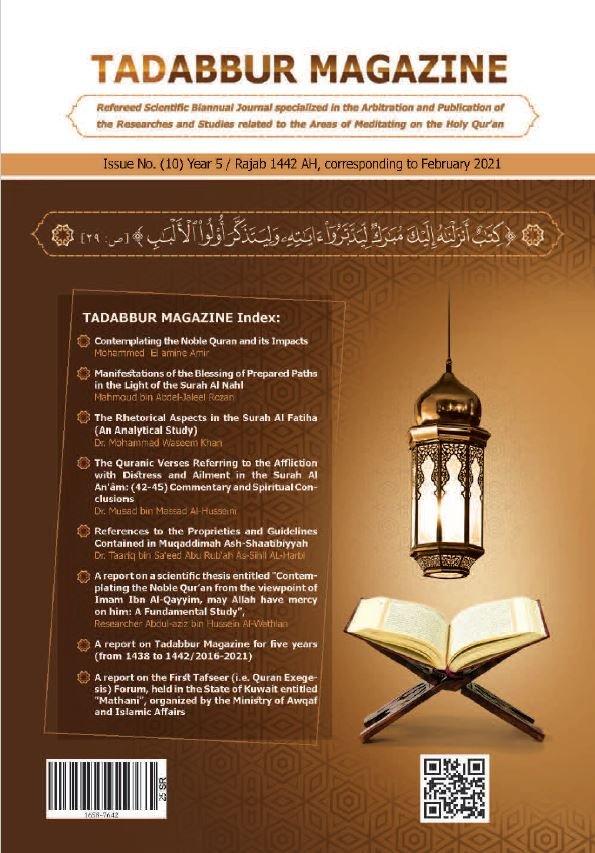
The Quranic Verses Referring to the Affliction with Distress and Ailment in the Surah Al An’âm: (42-45) Commentary and Spiritual Conclusions

Article Sidebar
submit-article
Submit Article
Introduction Of Tadabbur Journal
visitor
Visitor
Keywords
Announcements


Latest publications
Browse
Important_programs_for_researchers

All submitted researches to the Journal will be subject to the program of plagiarism detection
INDEX_1
Journal Indexing & Databases
DOAJ OpenAlex WIKIDATA EBSCO SUDOC CROSSREF (DOI) Google Scholar Search Google Scholar Profile Dimensions BASE Semantic Scholar WORLDCAT SCILITMain Article Content
Abstract
Through the verses in the Surah Al An’âm, the research addresses an issue of paramount importance, which is afflicting humans with distress that connotes want, poverty and ailment after sending the prophets and the resistance they received from their relevant peoples so that they can plead with and turn to their Lord with submission and humility to eliminate them from their suffering and confer upon them His bestowals and boons. However, those peoples persisted with their obstinacy and deviations without trying to learn from Allah’s warnings and signs. So He decoyed them by endowing them with lavish material possessions and all desirable conveniences until they behaved exultantly, ungratefully and arrogantly. Thereupon those rebellious peoples deserved divine punishment and were unexpectedly annihilated.
The aim of the research is to reflect on these verses which cast light on the state of people who behaved such a way and brought down upon themselves exemplary punishment. Since this is a normative precedent established by Allah, we must beware of the conduct and the example of those wrongdoers who were tempted and doomed to destruction so that we can protect ourselves against their fates. The approach used in this research was expanding on the relevant verses, their objectives, the lessons to be learned from them by reviewing the statements and accounts of the Muslim exegetes according to the original reliable sources and references. All of this is intended to derive parables and serious lessons to exercise caution and avoid the same fate.
Downloads
Article Details
Section

This work is licensed under a Creative Commons Attribution 4.0 International License.
Tadabbur Journal operates under the Diamond Open Access model. All articles and reports are published under the Creative Commons Attribution 4.0 International License (CC BY 4.0). https://creativecommons.org/licenses/by/4.0/
Under this license, users are permitted to:
-
Share: Copy and redistribute the material in any medium or format.
-
Adapt: Remix, transform, and build upon the material (including translation or summarization) for any purpose, even commercially.
Subject to the following conditions:
-
Attribution: Users must give appropriate credit to the author(s) and the Journal (as the original publisher), provide a link to the license, and indicate if changes were made.
Copyright Notice: Authors retain full copyright and publishing rights to their work without restrictions, granting the Journal only the right of first publication.
How to Cite
References
«البرهان في تناسب سور القرآن»، الغرناطي، أحمد بن إبراهيم الثقفي (المتوفى: 708هـ)، د.ط، وزارة الأوقاف والشؤون الإسلامية - المغرب، 1410هـ.
«التحرير والتنوير»، ابن عاشور، محمد بن عاشور التونسي (المتوفى: 1393هـ)، ط1، الدار التونسية للنشر - تونس، 1984هـ.
«تفسير ابن أبي حاتم (تفسير القرآن العظيم)»، ابن أبي حاتم، أبو محمد عبد الرحمن بن محمد الرازي (المتوفى: 327هـ)، ط3، مكتبة نزار مصطفى الباز - السعودية، 1419هـ.
«تفسير ابن عطية (المحرر الوجيز في تفسير الكتاب العزيز)»، ابن عطية، أبو محمد عبد الحق بن غالب بن عطية الأندلسي المحاربي (المتوفى: 542هـ)، ط1، دار الكتب العلمية - بيروت، 1422هـ.
«تفسير ابن كثير (تفسير القرآن العظيم)»، ابن كثير، أبو الفداء إسماعيل بن
عمر بن كثير القرشي الدمشقي (المتوفى: 774هـ)، ط2، دار طيبة للنشر والتوزيع، 1420هـ.
«تفسير الألوسي (روح المعاني)»، الألوسي، شهاب الدين محمود بن عبد الله الحسيني (المتوفى: 1270هـ)، ط1، دار الكتب العلمية - بيروت، 1415هـ.
«تفسير الرازي (مفاتيح الغيب)»، فخر الدين الرازي، محمد بن عمر بن الحسن التيمي، (المتوفى: 606هـ)، ط3، دار إحياء التراث العربي - بيروت، 1420هـ.
«تفسير السعدي (تيسير الكريم الرحمن في تفسير كلام المنان)»، السعدي، عبد الرحمن بن ناصر (المتوفى: 1376هـ)، ط1، مؤسسة الرسالة، 1420هـ.
«تفسير الطبري (جامع البيان في تأويل آي القرآن)»، الطبري، محمد بن جرير (المتوفى: 310هـ)، ط1، مؤسسة الرسالة، 1420هـ.
«تفسير القرطبي (الجامع لأحكام القرآن)»، القرطبي، أبو عبد الله محمد بن أحمد بن الأنصاري، (المتوفى: 671هـ)، ط2، دار الكتب المصرية - القاهرة، 1384هـ.
«السنن الإلهية في الأمم والجماعات والأفراد في الشريعة الإسلامية»، الدكتور: عبد الكريم زيدان، د.ط، وقد طبع بمؤسسة الرسالة، بيروت - لبنان، عام 1413هـ - 1993م.
«السنن الإلهية في السيرة النبوية»، الدكتور: رشيد كهوس، د.ط، دار السلام، القاهرة، عام 1438هـ.
«السنن الإلهية في القرآن الكريم، ودورها في استشراف المستقبل»، عماد خصاونة - خضر قزق على الرابط: https://andalusiat.com
«صحيح الإمام البخاري»، البخاري، محمد بن إسماعيل أبو عبدالله الجعفي، ط1، دار طوق النجاة، 1422هـ.
«صحيح الإمام مسلم»، مسلم بن الحجاج النيسابوري (المتوفى: 261هـ)، د.ط، دار إحياء التراث العربي - بيروت، د.ت.
«صحيح الجامع»، الألباني، محمد ناصر الدين (المتوفى: 1420هـ)، د.ط، المكتب الإسلامي، 1401هـ.
«مسند الإمام أحمد»، أحمد بن محمد بن حنبل الشيباني (المتوفى: 241هـ)، د.ط، مؤسسة الرسالة، 1421هـ.
«مفهوم السنن الإلهية في القرآن الكريم وعلاقته بمباحث العقيدة»، الأستاذ:خالد محمد أبو الفتوح على الرابط: http://almoslim.net/elmy/290530.
«مفهوم السنن الربانية في ضوء القرآن الكريم»، الأستاذ الدكتور: رمضان خميس زكي. www.riyadhalelm.com ›