
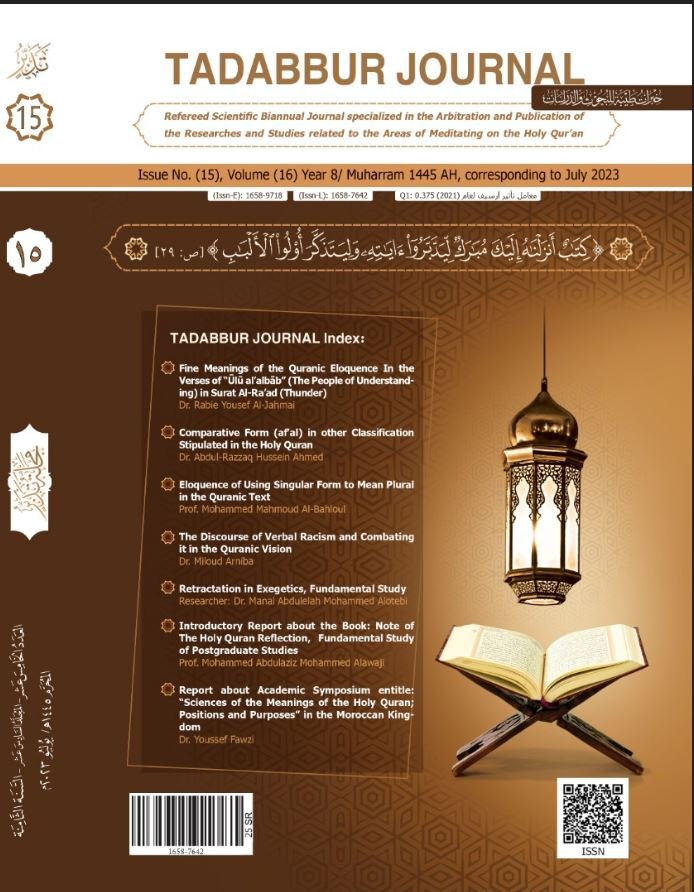
Comparative Form (afʻal) in other Classification Stipulated in the Holy Quran

Article Sidebar
submit-article
Submit Article
Introduction Of Tadabbur Journal
visitor
Visitor
Keywords
Announcements


Latest publications
Browse
Important_programs_for_researchers

All submitted researches to the Journal will be subject to the program of plagiarism detection
INDEX_1
Journal Indexing & Databases
DOAJ OpenAlex WIKIDATA EBSCO SUDOC CROSSREF (DOI) Google Scholar Search Google Scholar Profile Dimensions BASE Semantic Scholar WORLDCAT SCILITMain Article Content
Abstract
This paper studies a Qur’anic linguistic style, namely “Comparative Form (afʻal) in other Classification.”
The rules adopted by the linguists and interpreters of the Holy Quran stipulate that comparative form (afʻal) is used to compare between two things common in one adjective while one of them is more than the other. However, this form comes in the Holy Quran, Prophet’s hadiths, and Arabian poetry not to express the comparison but to express other meanings stated by the context.
Using the comparative form in these other meanings is one of the Arabic language fine secrets and an aspect of its semantics.
The research includes an introduction and two chapters as follows:
Chapter one: Brief introductions to the most significant issues of comparative form (afʻal).
Chapter two: an applied aspect of using comparative form (afʻal) in other meanings based on the Quranic positions.
The research revealed several findings including:
- Studying the rhetoric styles in the Holy Quran leads to founding out its secrets, helps contemplation, and then acting in it.
- The comparison concept is not achieved without two parties common in an adjective while one of them is more than the other.
- The grammarians and interpreters of the Holy Quran disagreed about comparative form (afʻal) does not express the comparison on three opinions: absolute prevention, definite allowance, and permit based on hearing without measurement.
- The Comparative form (afʻal) may exceed its original semantics to other ones including: adjectival participle, gerund, objective, superlative, exaggeration, transcendence and distance, resemblance, absolute preference, and compulsory preference.
Downloads
Article Details
Section

This work is licensed under a Creative Commons Attribution 4.0 International License.
Tadabbur Journal operates under the Diamond Open Access model. All articles and reports are published under the Creative Commons Attribution 4.0 International License (CC BY 4.0). https://creativecommons.org/licenses/by/4.0/
Under this license, users are permitted to:
-
Share: Copy and redistribute the material in any medium or format.
-
Adapt: Remix, transform, and build upon the material (including translation or summarization) for any purpose, even commercially.
Subject to the following conditions:
-
Attribution: Users must give appropriate credit to the author(s) and the Journal (as the original publisher), provide a link to the license, and indicate if changes were made.
Copyright Notice: Authors retain full copyright and publishing rights to their work without restrictions, granting the Journal only the right of first publication.
How to Cite
References
• ابن أبي الربيع، عبد الله بن أحمد. «البسيط في شرح جمل الزجاجي». تحقيق: عياد بن عيد الثبيتي. (ط1، بيروت: دار الغرب الإسلامي، 1986م).
• ابن حجر العسقلاني، أحمد بن علي. «فتح الباري بشرح صحيح البخاري». صححه: محب الدين الخطيب. (ط3، القاهرة: المكتبة السلفية، 1407هـ).
• ابن عاشور، محمد الطاهر. «التحرير والتنوير». (د.ط، نشر الدار التونسية للنشر، د.ت).
• ابن عطية، أبو محمد، عبد الحق بن غالب الأندلسي. «المحرر الوجيز في تفسير الكتاب العزيز». تحقيق: مجموعة من الباحثين. (ط1، قطر: وزارة الأوقاف والشؤون الإسلامية، 1436هـ - 2015م).
• ابن عقيل، عبد الله بن عبد الرحمن العقيلي الهمداني المصري. «المساعد على تسهيل الفوائد». تحقيق: محمد كامل بركات. (د.ط، جامعة أم القرى: منشورات مركز البحث العلمي وإحياء التراث الإسلامي، 1400هـ - 1980م).
• ابن عقيل، عبد الله بن عبد الرحمن العقيلي الهمداني المصري. «شرح ابن عقيل لألفية ابن مالك». اعتنى به: محمد محيي الدين عبد الحميد. (ط20، القاهرة: دار التراث، 1980م).
• ابن فارس، أبو الحسين، أحمد بن فارس بن زكرياء القزويني الرازي. «معجم مقاييس اللغة». تحقيق: عبد السلام هارون. (ط2، مصر: مطبعة مصطفى الحلبي وأولاده، 1390هـ - 1970م).
• ابن مالك الأندلسي، جمال الدين، محمد بن عبد الله. «شرح الكافية الشافية». تحقيق: عبد المنعم الهريدي. (ط1، جامعة أم القرى: معهد البحوث العلمية وإحياء التراث الإسلامي، 1434هـ - 2013م).
• ابن مالك الأندلسي، محمد بن عبد الله. «شرح التسهيل». تحقيق: عبد الرحمن السيد، محمد البدوي المختون. (د.ط، القاهرة: دار هجر للطباعة والنشر، د.ت).
• ابن مالك، محمد بن عبد الله بن مالك الأندلسي. «ألفية ابن مالك في النحو والصرف». اعتنى بضبطها والتعليق عليها عبد الله بن صالح الفوزان. (ط3، الدمام: دار ابن الجوزي، الدمام، 1434هـ).
• ابن هشام الأنصاري، أبو محمد، جمال الدين، عبد الله بن يوسف. «أوضح المسالك إلى ألفية ابن مالك». (ط6، بيروت: نشر دار إحياء التراث العربي، 1980م).
• ابن هشام الأنصاري، أبو محمد، جمال الدين، عبد الله بن يوسف. «شرح شذور الذهب». تحقيق: محمد محيي الدين عبد الحميد. (د.ط، بيروت: دار إحياء التراث العربي، د.ت).
• ابن هشام الأنصاري، أبو محمد، جمال الدين، عبد الله بن يوسف. «شرح قطر الندى وبل الصدى». تحقيق: محمد خير طعمة حلبي. (ط1، بيروت: دار المعرفة، 1418هـ - 1997م).
• ابن يعيش، موفق الدين، يعيش بن علي. «شرح المفصل». (د.ط، بيروت: نشر عالم الكتب، د.ت).
• أبو السعود العمادي، محمد بن محمد بن مصطفى الحنفي. «إرشاد العقل السليم إلى مزايا الكتاب الكريم». تحقيق: عبد القادر عطا. (د.ط، نشر مكتبة الرياض الحديثة، د.ت).
• أبو جعفر النحاس، أحمد بن محمد. «إعراب القرآن». تحقيق: زهير غازي زاهد. (ط3، بيروت: عالم الكتب، 1409هـ - 1988م).
• أبو حيان، محمد بن يوسف بن علي. «البحر المحيط». تحقيق: عبد الرزاق المهدي. (د.ط، بيروت: دار إحياء التراث العربي، د.ت).
• أبو سعيد، محمد عبد المجيد، «ظاهرة التفضيل بين القرآن الكريم واللغة». مجلة البلقاء، العلوم الإنسانية والاجتماعية، مج9، ع1، (2002م): 228.
• أبو عبيدة ، معمر بن المثنى التيمي. «مجاز القرآن». تحقيق وتعليق: محمد فؤاد سزكين. (د.ط، القاهرة: مكتبة الخانجي، 1381هـ).
• الأزهري، خالد بن عبد الله. «شرح التصريح على التوضيح». تحقيق: محمد باسل. (ط1، بيروت: دار الكتب العلمية، 2000م).
• الأزهري، نادي بن محمود. «الدخيل من أسباب التنزيل». (ط1، مصر: مطبعة الأمانة، 1999م).
• الاستراباذي، محمد بن الحسن. «شرح الرضي لكافية ابن الحاجب». تحقيق: حسن الحفظي، يحيى بشير المصري. (ط1، الرياض: جامعة الإمام محمد بن سعود الإسلامية، 1417هـ - 1996م).
• الآلوسي، شهاب الدين، محمود بن عبد الله الحسيني. «روح المعاني في تفسير القرآن العظيم والسبع المثاني». تحقيق علي عبد الباري عطية. (ط1، بيروت: دار الكتب العلمية، 1415هـ).
• الأنباري، أبو البركات، كمال الدين، عبد الرحمن بن محمد بن عبيد الله الأنصاري. «الإنصاف في مسائل الخلاف بين النحويين: البصريين والكوفيين». (ط1، المكتبة العصرية، 1424هـ - 2003م).
• الترمذي، أبو عيسى، محمد بن عيسى. «الجامع الصحيح». (د.ط، نشر بيت الأفكار الدولية، 2004م).
• الجدية، أحمد إبراهيم، مهرة، بسام حسن مهرة. «صيغة أفعل التفضيل في القرآن الكريم: دراسة نحوية». مجلة الجامعة الإسلامية بغزة، البحوث الإنسانية، مج. ٢٠، ع. ٢، (يونيو ٢٠١٢ م): ٢٤٧- ٢٥٤.
• الجمل، سليمان بن عمر العجيلي. «الفتوحات الإلهية بتوضيح تفسير الجلالين للدقائق الخفية». ضبطه: إبراهيم شمس الدين. (ط ٣، بيروت: دار الكتب العلمية، ٢٠١١ م).
• الحلواني، محمد خير. «المغني الجديد في علم الصرف». (ط ٥، بيروت: دار الشرق العربي، ١٩٩٩ م).
• الحملاوي، أحمد بن محمد. «شذا العرف في فن الصرف». (ط ١، الرياض: مكتبة المعارف للنشر والتوزيع، ١٤٢٢ هـ- ٢٠٠١ م).
• الخوارزمي، القاسم بن الحسين. «شرح المفصل في صنعة الإعراب». تحقيق: عبد الرحمن بن سليمان العثيمين. (ط ١، بيروت: دار الغرب الإسلامي، ١٩٩٠ م).
• الرازي، فخر الدين، محمد بن عمر. «مفاتيح الغيب». (ط ٤، بيروت: مكتب تحقيق دار إحياء التراث العربي، ١٤٢٢ هـ- ٢٠٠١ م).
• الزجاج، أبو إسحاق، إبراهيم بن السري. «معاني القرآن وإعرابه». تحقيق: عبد الجليل شلبي. (ط ١، بيروت: عالم الكتب، ١٩٨٨ م).
• الزمخشري، أبو القاسم، محمود بن عمر. «الكشاف عن حقائق التنزيل وعيون الأقاويل في وجوه التأويل». تحقيق وتعليق: عادل عبد الموجود، علي معوض، فتحي عبد الرحمن حجازي. (ط ١، الرياض: مكتبة العبيكان، ١٤١٨ هـ- ١٩٩٨ م).
• الزمخشري، أبو القاسم، محمود بن عمر. «المفصل في علم العربية». (د.ط، بيروت: مطبعة دار الجيل، د.ت).
• السامرائي، فاضل صالح. «لمسات بيانية في نصوص من التنزيل». (ط ٤، دمشق: دار ابن كثير، ١٤٤٢ هـ- ٢٠٢١ م).
• السامرائي، فاضل صالح. «معاني النحو». (د.ط، مطابع دار الحكمة للطباعة والنشر، ١٩٩١ م).
• السمين الحلبي، أحمد بن يوسف. «الدر المصون في علوم الكتاب المكنون». تحقيق: أحمد بن محمد الخراط. (ط ١، دمشق: نشر دار القلم، ١٤٠٦ هـ- ١٩٨٦ م).
• السيوطي، جلال الدين، عبد الرحمن بن أبي بكر. «الأشباه والنظائر في قواعد وفروع الشافعية». تحقيق محمد المعتصم بالله البغدادي. (ط ٤، بيروت: دار الكتب العلمية، ١٤١٨ هـ- ١٩٩٨ م).
• السيوطي، جلال الدين، عبد الرحمن بن أبي بكر. «المزهر في علوم اللغة وأنواعها ومعرفة الرديء المذموم من اللغات». تحقيق: فؤاد علي منصور. (ط1، بيروت: دار الكتب العلمية، 1418هـ - 1998م).
• السيوطي، جلال الدين، عبد الرحمن بن أبي بكر. «همع الهوامع شرح جمع الجوامع». تصحيح: السيد محمد بدر الدين النعساني. (د.ط، بيروت: دار المعرفة، د.ت).
• الشاطبي، أبو إسحاق، إبراهيم بن موسى. «المقاصد الشافية على شرح الخلاصة الكافية». تحقيق: مجموعة من الباحثين. (ط1، جامعة أم القرى: نشر معهد البحوث العلمية وإحياء التراث الإسلامي، 1428هـ - 2007م).
• الشاطبي، أبو إسحاق، إبراهيم بن موسى. «الموافقات». حققه: أبو عبيدة مشهور بن حسن آل سلمان. (ط1، السعودية: دار ابن عفان، 1417هـ - 1997م).
• الشنقيطي، محمد الأمين بن محمد المختار بن عبد القادر الجكني. «أضواء البيان في إيضاح القرآن بالقرآن». (د.ط، بيروت: دار الفكر، 1415هـ - 1995م).
• الشوكاني، محمد بن علي. «فتح القدير الجامع بين فني الرواية والدراية من علم التفسير». (د.ط، بيروت: دار الفكر، د.ت).
• الصبَّان، محمد بن علي. «حاشية الصبّان على شرح الأشموني لألفية ابن مالك». (د.ط، بيروت: دار إحياء الكتب العربية، د.ت).
• الطبري، أبو جعفر، محمد بن جرير. «جامع البيان عن تأويل آي القرآن». تحقيق: عبد الله بن عبد المحسن التركي بالتعاون مع مركز البحوث والدراسات بدار هجر. (ط1، دار هجر للطباعة والتوزيع، 1422هـ - 2001م).
• العيني، بدر الدين، محمود بن أحمد. «عمدة القاري شرح صحيح البخاري». (د.ط، بيروت: دار الفكر، د.ت).
• الغلاييني، مصطفى بن محمد سليم. «جامع الدروس العربية». مراجعة: عبد المنعم خفاجة. (ط21، بيروت: منشورات المكتبة العصرية، 1408هـ - 1987م).
• الفارسي، أبو علي، الحسن بن عبد الغفار. «الحجة للقراء السبعة». تحقيق بدر الدين قهوجي وبشير حويجاتي. (د.ط، دمشق: دار المأمون للتراث، 1404هـ - 1984هـ).
• الفراء، يحيى بن زياد. «معاني القرآن». (ط3، بيروت: عالم الكتب، 1403هـ - 1983م).
• الفيروزآبادي، مجد الدين، محمد بن يعقوب. «القاموس المحيط». (د.ط، بيروت: المؤسسة العربية للطباعة والنشر، د.ت).
• القرطبي، أبو عبد الله، محمد بن أحمد. «الجامع لأحكام القرآن والمبين لما تضمنه من السنة وآي الفرقان». تحقيق: عبد الله بن عبد المحسن التركي بالاشتراك مع آخرين. (ط1، بيروت: نشر مؤسسة الرسالة، 1427هـ).
• القشيري، أبو الحسين، مسلم بن الحجاج النيسابوري. «صحيح مسلم». رقمه محمد فؤاد عبد الباقي. (ط1، القاهرة: دار إحياء الكتب العربية، 1374هـ).
• القِنَّوجي، أبو الطيب، محمد صديق حسن خان البخاري. «فتح البيان في مقاصد القرآن». اعتنى بطبعه: عبد الله بن إبراهيم الأنصاري. (د.ط، قطر: إدارة إحياء التراث الإسلامي، 1410هـ - 1989م).
• القيسي، أبو محمد، مكي بن أبي طالب الأندلسي. «مشكل إعراب القرآن». تحقيق: حاتم صالح الضامن. (ط2، بيروت: مؤسسة الرسالة، 1405هـ).
• الكفوي، أبو البقاء، أيوب بن موسى. «الكليات: معجم في المصطلحات والفروق اللغوية». حققه: عدنان درويش، محمد المصري. (ط1، بيروت: مؤسسة الرسالة، 1412هـ - 1992م).
• المبرد، أبو العباس، محمد بن يزيد. «المقتضب». تحقيق: الشيخ محمد عبد الخالق عضيمة. (د.ط، بيروت: عالم الكتب، 1382هـ - 1962م).
• المنتجب الهمداني، حسين بن أبي العز. «الفريد في إعراب القرآن المجيد». تحقيق: فهمي النمر، فؤاد علي مخيمر. (ط1، الدوحة: دار الثقافة، 1411هـ - 1991م).
• الواحدي، أبو الحسن، علي بن أحمد. «التفسير البسيط». (ط1، جامعة الإمام محمد بن سعود الإسلامية: عمادة البحث العلمي، 1430هـ).
• برجستراسر. «التطور النحوي للغة العربية». صححه وعلق عليه: رمضان عبد التواب. (د.ط، القاهرة، مكتبة الخانجي، 1982م).
• بنت الشاطئ، عائشة بنت عبد الرحمن. «الإعجاز البياني للقرآن». (ط3، مصر: دار المعارف، 1984م).
• بنت الشاطئ، عائشة بنت عبد الرحمن. «التفسير البياني للقرآن الكريم». (ط2، مصر: دار المعارف، 1388هـ - 1968م).
• سيبويه، أبو بشر، عمرو بن عثمان بن قنبر. «الكتاب». تحقيق وشرح: عبد السلام هارون. (د.ط، القاهرة - الرياض: مكتبة الخانجي - دار الرفاعي، د.ت).
• عباس حسن. «النحو الوافي». (ط4، القاهرة: دار المعارف، د.ت).
• عضيمة، محمد عبد الخالق. «دراسات لأسلوب القرآن الكريم». (د. ط، القاهرة: دار الحديث، د. ت).
• محمد الأنطاكي. «المحيط في أصوات العربية». (ط 3، دار الشروق، د. ت).
• محمد الخضري. «حاشية الخضري على شرح ابن عقيل». راجعه وصححه لجنة علمية. (د. ط، القاهرة: مطبعة الاستقامة، ١٣٧٢ هـ - ١٩٥٣م).
• Bint Al-Shāṭi', 'Ā'ishah bint 'Abd Al-Raḥmān. "Al-i'jāz Al-bayānī lil-Qur'ān". (Third Edition, Egypt: Dār Al-Ma'ārif, 1984 AD).
• Abū Al-Sa'ūd Al-'Imādī, Mohammed ibn Mohammed ibn Muṣṭafā Al-Ḥanafī. "Irshād Al-'aql Al-salīm ilā Mazāyā Al-Kitāb Al-Karīm". Investigated by: 'Abd Al-Qādir 'Aṭā. (No Edition, published by: Riyadh Modern Bookstore, No Date).
• Abū Ja'far Al-Naḥḥās, Aḥmad ibn Mohammed. "I'rāb Al-Qur'ān". Investigated by: Zuhayr Ghāzī Zāhid. (Third Edition, Beirut: 'Ālam Al-Kutub, 1409H-1988 AD).
• Ibn Mālik, Mohammed ibn Abdullah ibn Mālik Al-Andalusī. "Alfiyat Ibn Mālik fī al-naḥw wa-Al-ṣarf". invistgated and commented by Abdullah ibn Ṣāliḥ Al-Fawzān. (Third Edition, Al-Dammām: Dār Ibn Al-Jawzī, Al-Dammām, 1434 AH).
• 5-Ibn Hishām Al-Anṣārī, Abū Mohammed, Jamāl Al-Dīn, Abdullah ibn Yūsuf. "Awḍaḥ Al-masālik ilā Alfiyat Ibn Mālik". (Sixth Edition, Beirut: Published by: Dār Iḥyā' Al-Turāth Al-'Arabī, 1980 AD).
• 6-Abū Ḥayyān, Mohammed ibn Yūsuf ibn Ali. "Al-Baḥr Al-muḥīṭ". Investigated by: 'Abd Al-Razzāq Al-Mahdī. (No Edition, Beirut: Dār Iḥyā' Al-Turāth Al-'Arabī, No Date).
• Ibn Abī Al-Rabī', Abdullah ibn Aḥmad. "Al-basīṭ fī sharḥ Jamal Al-Zajjājī". Investigated by: 'Ayyād ibn 'Īd Al-Thubaytī. (First Edition, Beirut: Dār Al-Gharb Al-Islāmī, 1986 AD).
• Ibn 'Āshūr, Mohammed Al-Ṭāhir. "Al-Taḥrīr wa-Al-tanwīr". (No Edition, published by Tunisian Publishing House, No Date).
• Bergstrasser. "Syntax Development of Arabic Language". invistgated and commented by: Ramaḍān 'Abd Al-Tawwāb. (No Edition, Cairo, Al-Khānjī Bookstore, 1982 AD).
• Al-Wāḥidī, Abū Al-Ḥasan, Ali ibn Aḥmad. "Al-tafsīr Al-basīṭ". (First Edition, Imam Mohammed bin Saudi Islamic University: Deanship of Academic Researches, 1430 AH).
• Bint Al-Shāṭi', 'Ā'ishah bint 'Abd Al-Raḥmān. "Al-tafsīr Al-bayānī lil-Qur'ān Al-Karīm". (Second Edition, Egypt: Dār Al-Ma'ārif, 1388 AH - 1968 AD).
• Al-Ṭabarī, Abū Ja'far, Mohammed ibn Jarīr. "Jāmi' Al-Bayān 'an Ta'wīl āy Al-Qur'ān". Investigated by: Abdullah ibn 'Abd Al-Muḥsin Al-Turkī in cooperation with Dār Hajar Center for Research and Studies. (First Edition, Dar Hajar for Printing & Distribution, 1422 AH - 2001 AD).
• Al-Ghalāyīnī, Muṣṭafā ibn Mohammed Salīm. "Jāmiʿ Al-Durūs Al-ʿArabīyah". Reviewed: ʿAbd Al-Munʿim Khafājah. (Second Edition, Beirut: Manshūrāt Modern Book Store, 1408 AH - 1987 AD).
• Al-Tirmidhī, Abū ʿIsā, Mohammed ibn ʿĪsā. "Al-Jāmiʿ Al-ṣaḥīḥ". (No Edition, Published by: Bayt Al-afkār Al-Dawlīyah, 2004 AD).
• Al-Qurṭubī, Abū Abdullah, Mohammed ibn Aḥmad. "Al-Jāmiʿ li-aḥkām Al-Qur'ān wālmubyn li-mā taḍammanahu min Al-Sunnah w'āy Al-Furqān". Investigated by: Abdullah ibn ʿAbd Al-Muḥsin Al-Turkī et al. (First Edition, Beirut: Published by: Al-Risalah Foundation, 1427 AH).
• Mohammed Al-Khuḍarī. "Ḥāshiyat Al-Khuḍarī ʿalá sharḥ Ibn ʿAqīl". Reviewed and Commented by the Academic Committee. (No Edition, Cairo: t Al-Isti qāmah Press, 1372 AH - 1953 AD).
• Alṣbbān, Mohammed ibn Ali. "Ḥāshiyat alṣbbān ʿalá sharḥ Al-Ushmūnī li-Alfīyat Ibn Mālik". (No Edition, Beirut: Dār Iḥyāʾ Al-Kutub Al-ʿArabīyah, No Date).
• Al-Fārisī, Abū Ali, Al-Ḥasan ibn ʿAbd Al-Ghaffār. "Al-Ḥujjah lil-qurrāʾ Al-sabʿah". invistgated by: Badr Al-Dīn Qahwajī wa-Bashīr Ḥwyjāty. (No Edition, Damascus: Dār Al-Maʾmūn lil-Turāth, 1404 AH - 1984 AH).
• Al-Azharī, Nādī ibn Mahmoud. "Al-Dakhīl min Asbāb Al-tanzīl". (First Edition, Egypt: Al-Amānah Press, 1999M).
• ʿUḍaymah, Mohammed ʿAbd Al-Khāliq. "Studies of the Holy Quran Style". (No Edition, Cairo: Dār Al-ḥadīth, No Date).
• Al-Samīn Al-Ḥalabī, Aḥmad ibn Yūsuf. "Al-Durr Al-maṣūn fī ʿulūm Al-Kitāb Al-maknūn". Investigated by: Aḥmad ibn Mohammed Al-Kharrāṭ. (First Edition, Damascus: Published by: Dār Al-Qalam, 1406 AH - 1986 AD).
• Al-Alūsī, Shihāb Al-Dīn, Mahmoud ibn Abdullah Al-Ḥusaynī. "Rūḥ Al-maʿānī fī tafsīr Al-Qur'ān Al-ʿAẓīm wa-Al-Sabʿ Al-mathānī". invistgated by: Ali ʿAbd Al-Bārī ʿAṭīyah. (First Edition, Beirut: Dār Al-Kutub Al-ʿIlmīyah, 1415 AH).
• Al-Ḥamalāwī, Aḥmad ibn Mohammed. "Shadhā Al-ʿurf fī Fann Al-ṣarf". (First Edition, Riyadh: Al-Maʿārif Publishing and Distbution Foundation, 1422 AH - 2001 AD).
• Ibn Mālik Al-Andalusī, Mohammed ibn Abdullah. "Sharḥ Al-Tas-hīl". Investigated by: ʿAbd Al-Raḥmān Al-Sayyid, Mohammed Al-Badawī Al-Makhtūn. (No Edition, Cairo: Dār Hajar Publishing and Distbution, No Date).
• Al-Azharī, Khālid ibn Abdullah. "Sharḥ Al-Taṣrīḥ ʿalá Al-Tawḍīḥ". Investigated by: Mohammed Bāsil. (First Edition, Beirut: Dār Al-Kutub Al-ʿIlmīyah, 2000 AD).
• Al-Asṭarābādhī, Mohammed ibn Al-Ḥasan. "Sharḥ Al-Riḍā Lkāfyh Ibn Al-Ḥājib". Investigated by: Ḥasan Al-Ḥifẓī, Yahyá Bashīr Al-Miṣrī. (First Edition, Riyadh: Imam Mohammed bin Saudi Islamic University, 1417 AH - 1996 AD).
• Ibn Hishām Al-Anṣārī, Abū Mohammed, Jamāl Al-Dīn, Abdullah ibn Yūsuf. "Sharḥ
Shudhūr Al-Dhahab". Investigated by: Mohammed Muhyī Al-Dīn 'Abd Al-Ḥamīd. (No Edition, Beirut: Dār Ihyā' Al-Turāth Al-'Arabī, No Date).
• Ibn 'Aqīl, Abdullah ibn 'Abd Al-Raḥmān Al-'Aqīlī Al-Hamadānī Al-Miṣrī. "Sharḥ Alfiyat Ibn Mālik". Cared by: Mohammed Muhyī Al-Dīn 'Abd Al-Ḥamīd. (Second Edition, Cairo: Dār Al-Turāth, 1980 AD).
• Ibn Hishām Al-Anṣārī, Abū Mohammed, Jamāl Al-Dīn, Abdullah ibn Yūsuf. "Sharḥ Qatar Al-Nadā Wa-Ball Al-Ṣadā". Investigated by: Mohammed Khayr Ṭu'mah Ḥalabī. (First Edition, Beirut: Dār Al-Ma'rifah, 1418 AH - 1997 AD).
• Ibn Mālik Al-Andalusī, Jamāl Al-Dīn, Mohammed ibn Abdullah. "Sharḥ Al-Kāfiyah Al-Shāfiyah". Investigated by: 'Abd Al-Mun'im alhrydy. (First Edition, Umm Al-Qura University: Institute of Academic Research & Revival of Islamic Heritage, 1434 AH - 2013 AD).
• Ibn Ya'īsh, Muwaffaq Al-Dīn, Ya'īsh ibn Ali. "Sharḥ Al-Mufaṣṣal". (No Edition, Beirut: published by: 'Ālam Al-Kutub, No Date).
• -Al-Khuwārizmī, Al-Qāsim ibn Al-Ḥusayn. "Sharḥ Al-Mufaṣṣal fī Ṣan'at Al-I'rāb". Investigated by: 'Abd Al-Raḥmān ibn Sulaymān Al-'Uthaymīn. (First Edition, Beirut: Dār Al-Gharb Al-Islāmī, 1990 AD).
• Al-Qushayrī, Abū Al-Ḥusayn, Muslim ibn Al-Ḥajjāj Al-Nīsābūrī. "Ṣaḥīḥ Muslim". Numbered by: Mohammed Fu'ād 'Abd Al-Bāqī. (First Edition, Cairo: Dār Ihyā' Al-Kutub Al-'Arabīyah, 1374 AH).
• Al-jiddīyah, Aḥmad Ibrāhīm, Muhrah, Bassām Ḥasan Muhrah. "Forms of Comparative Af'āl in the Holy Quran: Syntax Study". Journal of Islamic Univeristy in Gaza, Journal of Humanatrian Research. 20, 'A. 2, (June 2012 AD): 247-2.
• Abū Sa'īd, Mohammed 'Abd Al-Majīd, "Ẓāhirat Al-tafḍīl bayna Al-Qur'ān Al-Karīm wa-Al-lughah". Al-Balqā' Journal, Humanities and Social Sciences, Volume. 9, 'A. 1, (2002 AD): 228.
• Al-'Aynī, Badr Al-Dīn, Mahmoud ibn Aḥmad. "'Umdat Al-Qārī Sharḥ Ṣaḥīḥ Al-Bukhārī". (No Edition, Beirut: Dār Al-Fikr, No Date).
• -Ibn Ḥajar Al-'Asqalānī, Aḥmad ibn Ali. "Fatḥ Al-Bārī bi-sharḥ Ṣaḥīḥ Al-Bukhārī". Invisṭgated by: Muḥib Al-Dīn Al-Khaṭīb. (Third Edition, Cairo: Al-Maktabah Al-Salafīyah, 1407 AH).
• Alqinnawjy, Abū Al-Ṭayyib, Mohammed Ṣiddīq Ḥasan Khān Al-Bukhārī. "Fatḥ Al-Bayān fī Maqāṣid Al-Qur'ān". Printed by: Abdullah ibn Ibrāhīm Al-Anṣārī. (No Edition, Qatar: Idārat Ihyā' Al-Turāth Al-Islāmī, 1410 AH - 1989 AD).
• Al-Shawkānī, Mohammed ibn Ali. "Fatḥ Al-qadīr Al-Jāmi' bayna Fannī Al-riwāyah wa-Al-dirāyah min 'ilm Al-tafsīr". (No Edition, Beirut: Dār Al-Fikr, No Date).
• Al-Jamal, Sulaymān ibn Omar Al-'Ujaylī. "Al-Futūḥāt Al-ilāhīyah bi-tawḍīḥ tafsīr Al-Jalālayn lldqā'q Al-khafīyah". Reviewed by: Ibrāhīm Shams Al-Dīn. (Third Edition,
Beirut: Dār Al-Kutub Al-'Ilmīyah, 2011M).
● Al-Muntajab Al-Hamadānī, Ḥusayn ibn Abī Al-'Izz. "Al-farīd fī i'rāb Al-Qur'ān Al-Majīd". Investigated by: Fahmī Al-Nimr, Fu'ād Ali Mukhaymar. (First Edition, Al-Dawḥah: Dār Al-Thaqāfah, 1411 AH - 1991 AD).
● Al-Fayrūz Ābādī, Majd Al-Dīn, Mohammed ibn Ya'qūb. "Al-Qāmūs Al-Muḥīṭ". (No Edition, Beirut: Arab Foundation Publishing and Distribution, No Date).
● Sībawayh, Abū Bishr, 'Amr ibn 'Uthmān ibn Qanbar. "Al-Kitāb". invistgated and commented by: 'Abd Al-Salām Hārūn. (No Edition, Cairo - Riyadh: Al-Khānjī Bookstore -Dār Al-Rifā'ī, No Date).
● Al-Zamakhsharī, Abū Al-Qāsim, Mahmoud ibn Omar. "Al-Kashshāf 'an ḥaqā'iq Al-tanzīl wa- 'uyūn Al-aqāwīl fī Wujūh Al-ta'wīl". invistgated and commented by: 'Ādil 'Abd Al-Mawjūd, Ali Mu'awwaḍ, Fatḥī 'Abd Al-Raḥmān Hijāzī. (First Edition, Riyadh: Al-'Ubaykān Bookstore, 1418 AH - 1998 AD).
● Al-Kaffawī, Abū Al-Baqā', Ayyūb ibn Mūsā. "Al-Kullīyāt: Mu'jam fī Al-muṣṭalaḥāt wa-Al-furūq Al-lughawīyah". Investigated by: 'Adnān Darwīsh, Mohammed Al-Miṣrī. (First Edition, Beirut: Al-Risalah Foundation, 1412 AH - 1992 AD).
● Al-Sāmarrā'ī, Fāḍil Ṣāliḥ. "Lamasāt bayānīyah fī nuṣūṣ min Al-tanzīl". (Fourth Edition, Damascus: Dār Ibn Kathīr, 1442 AH - 2021 AD).
● Al-Baṣrī, Abū 'Ubaydah, Mu'ammar ibn Al-Muthannā Al-Taymī. "Mujāz Al-Qur'ān". invistgated and commented by: Mohammed Fu'ād Sizkīn. (No Edition, Cairo: Al-Khānjī Bookstore, 1381 AH).
● Ibn 'Aṭīyah, Abū Mohammed, 'Abd Al-Ḥaqq ibn Ghālib Al-Andalusī. "Al-Muḥarrir Al-Wajīz Fī Tafsīr Al-Kitāb Al-'Azīz". Investigated by: majmū'ah min Al-bāḥithīn. (First Edition, Qatar: Ministry of Endowments and Islamic Affairs, 1436 AH - 2015 AD).
● Ibn Khālawayh, Ḥusayn ibn Aḥmad. "Mukhtaṣar fī Shawāz Al-Qirā'āt". Published by: Bergstrasser. (No Edition, Egypt: Al-Maṭba'ah Al-Raḥmānīyah, 1934 AD).
● Al-Suyūṭī, Jalāl Al-Dīn, 'Abd Al-Raḥmān ibn Abī Bakr. "Al-Muz'hir fī 'ulūm Al-lughah wa-anwā'ihā wa-ma'rifat Al-radī' almdhmwm min Al-lughāt". Investigated by: Fu'ād Ali Manṣūr. (First Edition, Beirut: Dār Al-Kutub Al-'Ilmīyah, 1418 AH - 1998 AD).
● Ibn 'Aqīl, Abdullah ibn 'Abd Al-Raḥmān Al-'Aqīlī Al-Hamadānī Al-Miṣrī. "Al-musā'id 'alā Tas'hīl Al-Fawā'id". Investigated by: Mohammed Kāmil Barakāt. (No Edition, Umm Al-Qura University: Manshūrāt Markaz Al-Baḥth Al-'Ilmī wa-Iḥyā' Al-Turāth Al-Islāmī, 1400 AH - 1980 AD).
● Al-Farrā', Yaḥyā ibn Ziyād. "Ma'ānī Al-Qur'ān". (Third Edition, Beirut: 'Ālam Al-Kutub, 1403 AH - 1983 AD).
● Al-Zajjāj, Abū Isḥāq, Ibrāhīm ibn Al-sirrī. "Ma'ānī Al-Qur'ān wa-I'rābuh". Investigated by: 'Abd Al-Jalīl Shalabī. (First Edition, Beirut: 'Ālam Al-Kutub, 1988 AD).
● Al-Sāmarrā'ī, Fāḍil Ṣāliḥ. "Ma'ānī Al-Naḥw". (No Edition, Maṭābi' Dār Al-Ḥikmah
Print and Publishing, 1991 AD).
● Ibn Fāris, Abū Al-Husayn, Ahmad ibn Fāris ibn Zakariyā' Al-Qazwīnī Al-Rāzī. "Mu'jam Maqāyīs Al-lughah". Investigated by: 'Abd Al-Salām Hārūn. (Second Edition, Egypt: Mustafā Al-Halabī & Sons Press, 1390 AH - 1970 AD).
● Al-Halawānī, Mohammed Khayr. "Al-Mughnī Al-jadīd fī 'ilm Al-sarf". (Fifth Edition, Beirut: Dār Al-Sharq Al-'Arabī, 1999M).
● Al-Rāzī, Fakhr Al-Dīn, Mohammed ibn Omar. "Mafātīh Al-Ghaib". (Fourth Edition, Beirut: Maktab invistgated by: Dār Ihyā' Al-Turāth Al-'Arabī, 1422 AH - 2001 AD).
● Al-Zamakhsharī, Abū Al-Qāsim, Mahmoud ibn Omar. "Al-Mufassal fī 'ilm Al-'Arabiyah". (No Edition, Beirut: Dār Al-Jīl Press, No Date).
● Al-Shātibī, Abū Ishāq, Ibrāhīm ibn Mūsā. "Al-maqāsid Al-shāfiyah 'alā sharh Al-Khulāsah Al-Kāfiyah". Investigated by: a group of reseachers. (First Edition, Umm Al-Qura University: published by: Institute of Academic Research & Revival of Islamic Heritage, 1428 AH - 2007 AD).
● Al-Mibrad, Abū Al-'Abbās, Mohammed ibn Yazīd. "Al-Muqtadab". Investigated by: Sheikh Mohammed 'Abd Al-Khāliq 'Udaymah. (No Edition, Beirut: 'Ālam Al-Kutub, 1382H-1962M).
● Al-Shātibī, Abū Ishāq, Ibrāhīm ibn Mūsā. "Al-Muwāfaqāt". Investigated by: Abū 'Ubaydah Mashhūr ibn Hasan Āl Salmān. (First Edition, Saudi Arabia: Dār Ibn 'Affān, 1417 AH - 1997 AD).
● 'Abbās Hasan. "Al-nahw Al-Wāfī". (Fourth Edition, Cairo: Dār Al-Ma'ārif, No Date).
● Al-Suyūtī, Jalāl Al-Dīn, 'Abd Al-Rahmān ibn Abī Bakr. "Ham' Al-hawāmi' sharh jam' Al-jawāmi'". Invistgated by: Al-Sayyid Mohammed Badr Al-Dīn Al-Na'sānī. (No Edition, Beirut: Dār Al-Ma'rifah, No Date).
● Al-Anbārī, Abū Al-Barakāt, Kamāl Al-Dīn, 'Abd Al-Rahmān ibn Mohammed ibn 'Ubayd Allāh Al-Ansārī. "Al-Insāf fī masā'il Al-khilāf bayna Al-nahwiyīn: Al-Basriyīn wa-Al-Kūfiyīn". (First Edition, Modern Book Store, 1424 AH - 2003 AD).
● Mohammed Al-Antākī. "Al-muhīt fī Aswāt Al-'Arabīyah". (Third Edition, Dār Al-Shurūq, No Date).
● Al-Qaysī, Abū Mohammed, Makkī ibn Abī Tālib Al-Andalusī. "Mushkil i'rāb Al-Qur'ān". Investigated by: Hātim Sālih Al-Dāmīn. (Second Edition, Beirut: Al-Risālah Foundation, 1405 AH).
● Al-Shinqītī, Mohammed Al-Amīn ibn Mohammed Al-Mukhtār ibn 'Abd Al-Qādir Al-Jakanī. "Adwā' Al-Bayān fī Īdāh Al-Qur'ān bi-Al-Qur'ān". (No Edition, Beirut: Dār Al-Fikr, 1415 AH - 1995 AD).