
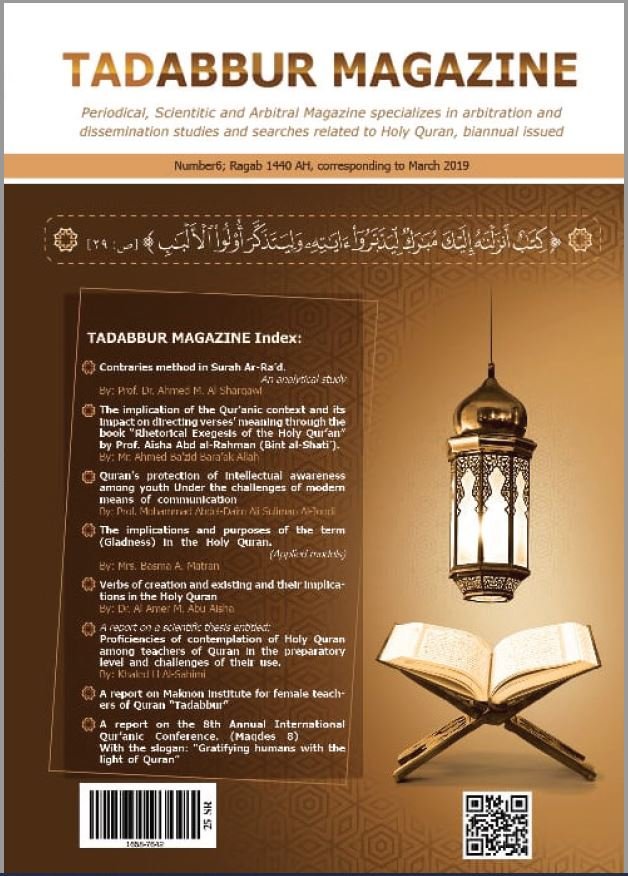
Contraries method in Surah Ar-Ra’d. An analytical study

Article Sidebar
submit-article
Submit Article
Introduction Of Tadabbur Journal
visitor
Visitor
Keywords
Announcements


Latest publications
Browse
Important_programs_for_researchers

All submitted researches to the Journal will be subject to the program of plagiarism detection
INDEX_1
Journal Indexing & Databases
DOAJ OpenAlex WIKIDATA EBSCO SUDOC CROSSREF (DOI) Google Scholar Search Google Scholar Profile Dimensions BASE Semantic Scholar WORLDCAT SCILITMain Article Content
Abstract
The contraries method is one of the most splendid semantic methods; where by it, many meanings manifest and remain for a long in the minds; figures out the facts steady in the heaven. In Quran there are a lot of contraries between one meaning and other, one phrase and other, one adverb and other or between one destiny and other, in these Quranic contraries rhetoric arises in its finest forms. This research is to study the contraries method as a thorough study, the linguistic and terminological meaning of contraries, its forms, the benefits of studying it and the difference
between contraries, antithesis and semantic partition (classification), with the application on the contraries in Ar-Ra’d surah by highlights the benefits and smoothness of it. This surah characterized by its abundant contraries which possess nearly a third of its verses (14 verses out of 43 verses) because of the harmony of that charming method with the native aim the surah which is, admit the three original principles: Monotheism, (Islam) Massage and Resurrection, from these three principles we have three topicsin this study.
Downloads
Article Details
Section

This work is licensed under a Creative Commons Attribution 4.0 International License.
Tadabbur Journal operates under the Diamond Open Access model. All articles and reports are published under the Creative Commons Attribution 4.0 International License (CC BY 4.0). https://creativecommons.org/licenses/by/4.0/
Under this license, users are permitted to:
-
Share: Copy and redistribute the material in any medium or format.
-
Adapt: Remix, transform, and build upon the material (including translation or summarization) for any purpose, even commercially.
Subject to the following conditions:
-
Attribution: Users must give appropriate credit to the author(s) and the Journal (as the original publisher), provide a link to the license, and indicate if changes were made.
Copyright Notice: Authors retain full copyright and publishing rights to their work without restrictions, granting the Journal only the right of first publication.
How to Cite
References
الإتقان في علوم القرآن: جلال الدين السيوطي (ت 911هـ)، القاهرة: مطبعة مصطفى البابي الحلبي، 1370هـ.
إرشاد العقل السليم إلى مزايا الكتاب الكريم: أبو السعود محمد بن محمد مصطفى العمادي الحنفي (ت 982هـ)، بيروت: دار الفكر، (د.ت).
الأصلان في علوم القرآن: د. عبد المنعم القيعي، القاهرة: كلية أصول الدين بالقاهرة، ط4، 1417هـ.
أضواء البيان في إيضاح القرآن بالقرآن: محمد الأمين بن محمد المختار الشنقيطي (ت 1393هـ)، طبع على نفقة الأمير أحمد بن عبد العزيز آل سعود، 1403هـ.
إيضاح المكنون في الذيل على كشف الظنون: إسماعيل باشا البغدادي، بيروت: مؤسسة التاريخ العربي، (د.ت).
الإيضاح في علوم البلاغة: جلال الدين القزويني (ت 739هـ)، القاهرة: دار الكتاب المصري، (د.ت).
البحر المحيط: أبو حيان الأندلسي، محمد بن يوسف (ت 745هـ)، بيروت: دار الفكر، (د.ت).
البدر الطالع بمحاسن من بعد القرن السابع: محمد بن علي بن محمد الشوكاني (ت 1250هـ)، بيروت: دار المعرفة، (د.ت).
البرهان في علوم القرآن: بدر الدين الزركشي (ت 794هـ)، القاهرة: دار إحياء الكتب العربية، 1376هـ.
البلاغة العربية أسسها وعلومها وفنونها: عبد الرحمن حسن حبنكة الميداني، دمشق: دار القلم، (د.ت).
تأويل مشكل القرآن: ابن قتيبة الدينوري، أبو محمد عبد الله بن مسلم (ت 276هـ)، القاهرة: دار التراث، (د.ت).
تحرير التحبير في صناعة الشعر والنثر: ابن أبي الأصبع الإفريقي (ت 654هـ)، القاهرة: المجلس الأعلى للشؤون الإسلامية، (د.ت).
التسهيل لعلوم التنزيل: محمد بن أحمد بن جزي الكلبي الغرناطي (ت 792هـ)، (د.م): (د.ن)، (د.ت).
تفسير القرآن الحكيم (المشتهر باسم تفسير المنار): السيد محمد رشيد رضا، القاهرة: دار المنار، ط2، 1372هـ.
تفسير القرآن العظيم: الحافظ عماد الدين أبو الفداء إسماعيل بن خير القرشي الدمشقي (ت 774هـ)، القاهرة: دار التراث العربي، (د.ت).
تفسير القرآن العظيم: ابن أبي حاتم الرازي، عبد الرحمن بن محمد بن إدريس (ت 327هـ)، مكة المكرمة: مكتبة نزار مصطفى الباز، 1419هـ.
التفسير الكبير (مفاتيح الغيب): فخر الدين الرازي (ت 606هـ)، بيروت: دار الفكر، 1405هـ.
تيسير الكريم الرحمن في تفسير كلام المنان: الشيخ عبد الرحمن بن ناصر السعدي (ت 1376هـ)، الرياض: الرئاسة العامة لإدارة البحوث العلمية والإفتاء والدعوة، 1404هـ.
جامع البيان عن تأويل آي القرآن: الإمام أبو جعفر محمد بن جرير الطبري (ت 310هـ)، القاهرة: دار الحديث، 1407هـ.
الجامع لأحكام القرآن: أبو عبد الله محمد بن أحمد الأنصاري القرطبي (ت 671هـ)، القاهرة: الهيئة المصرية العامة للكتاب، 1987م.
خزانة الأدب وغاية الأرب: تقي الدين أبو بكر علي بن عبد الله بن حجة الحموي (ت 837هـ)، بيروت: دار صادر، (د.ت).
دستور العلماء (أو جامع العلوم في اصطلاحات الفنون): القاضي عبد رب النبي بن عبد رب الرسول الأحمد نكري، بيروت: دار الكتب العلمية، ط1، 1421هـ.
ديوان المتنبي: تصحيح: مصطفى السقا، إبراهيم الأبياري، وعبد الحفيظ شلبي، القاهرة: مطبعة مصطفى البابي الحلبي، 1376هـ - 1956م.
الدر المنثور في التفسير بالمأثور: جلال الدين السيوطي (ت 911هـ)، بيروت: دار الفكر، 1403هـ.
الدعوة الإسلامية تستقبل عامها الخامس عشر: محمد الغزالي، القاهرة: دار نهضة مصر، ط1، (د.ت).
سنن ابن ماجه: أبو عبد الله محمد بن يزيد القزويني (ت 275هـ)، القاهرة: دار الحديث، (د.ت).
سنن أبي داود: سليمان بن الأشعث السجستاني (ت 275هـ)، بيروت: دار الكتب العلمية، (د.ت).
سنن الترمذي: أبو عيسى محمد بن عيسى بن سورة الترمذي (ت 279هـ)، بيروت: دار الفكر، 1408هـ.
سنن سعيد بن منصور: أبو عثمان سعيد بن منصور بن شعبة الخراساني الجوزجاني (ت 227هـ)، تحقيق: د. سعد بن عبد الله آل حميد، الرياض: دار العصيمي، ط1، 1414هـ.
شذرات الذهب في أخبار من ذهب: ابن العماد الحنبلي، عبد الحي بن أحمد العكري (ت 1089هـ)، تحقيق: عبد القادر الأرناؤوط ومحمود الأرناؤوط، دمشق: دار ابن كثير، 1406هـ.
صحيح البخاري: أبو عبد الله محمد بن إسماعيل البخاري (ت 256هـ)، بيروت: دار الكتب العلمية، (د.ت).
صحيح مسلم: الإمام مسلم بن الحجاج القشيري النيسابوري (ت 261هـ)، القاهرة: دار إحياء الكتب العربية، (د.ت).
الصناعتين: أبو هلال العسكري، حسن بن عبد الله (ت 395هـ)، بيروت: دار الكتب العلمية، 1401هـ.
طبقات الشافعية الكبرى: تاج الدين عبد الوهاب بن علي السبكي (ت 771هـ)، تحقيق: د. محمود محمد الطناحي ود. عبد الفتاح محمد الحلو، القاهرة: دار هجر للطباعة والنشر، ط2، 1413هـ.
الطراز المتضمن لأسرار البلاغة وعلوم حقائق الإعجاز: يحيى بن حمزة بن علي بن إبراهيم العلوي اليمني (ت 749هـ)، بيروت: دار الكتب العلمية، (د.ت).
عبد الرحمن حبنكة الميداني كما عرفته: عائشة راغب الجراح، دمشق: دار القلم، ط1، 1422هـ.
علم المعاني: عبد العزيز عتيق (ت 1396هـ)، بيروت: دار النهضة العربية، ط1، 1430هـ.
فتح القدير الجامع بين فني الرواية والدراية من علم التفسير: محمد بن علي بن محمد الشوكاني (ت 1250هـ)، القاهرة: مطبعة مصطفى البابي الحلبي، ط1، 1350هـ.
الكشاف عن حقائق غوامض التنزيل وعيون الأقاويل في وجوه التأويل: الإمام محمود بن عمر الزمخشري المعتزلي (ت 528هـ)، القاهرة: دار الريان للتراث، ط3، 1407هـ.
الكليات: أبو البقاء أيوب بن موسى الحسيني الكفوي (ت 1094هـ)، تحقيق: عدنان درويش ومحمد المصري، بيروت: مؤسسة الرسالة، 1419هـ - 1998م.
لسان العرب: ابن منظور، جمال الدين أبو الفضل محمد بن مكرم (ت 711هـ)، القاهرة: دار المعارف، (د.ت).
المثل السائر في أدب الكاتب والشاعر: أبو الفتح ضياء الدين نصر الله بن محمد بن الأثير الموصلي (ت 637هـ)، تحقيق: محمد محيي الدين عبد الحميد، بيروت: المكتبة العصرية، 1995م.
مجاز القرآن: أبو عبيدة معمر بن المثنى التيمي البصري (ت 209هـ)، تحقيق: محمد فؤاد سزكين، القاهرة: مكتبة الخانجي، 1381هـ.
مجمع الزوائد ومنبع الفوائد: نور الدين علي بن أبي بكر الهيثمي (ت 807هـ)، بيروت: دار الكتاب العربي، 1402هـ.
مجموع فتاوى ابن تيمية: تقي الدين أحمد بن عبد الحليم بن تيمية (ت 728هـ)، الرياض: مطابع الرياض، (د.ت).
المحرر الوجيز في تفسير الكتاب العزيز: ابن عطية الأندلسي، القاضي عبد الحق بن غالب (ت 546هـ)، فاس: المجمع العلمي بفاس، 1395هـ، وبيروت: دار الكتب العلمية، (د.ت).
المستدرك على الصحيحين: أبو عبد الله الحاكم النيسابوري (ت 405هـ)، وفي ذيله تلخيص المستدرك للإمام شمس الدين الذهبي (ت 748هـ)، بيروت: دار الكتب العلمية، (د.ت).
مسند الإمام أحمد بن حنبل: أحمد بن حنبل (ت 241هـ)، القاهرة: مؤسسة قرطبة (بتعليق الشيخ شعيب الأرناؤوط) / دار المعارف (بتحقيق أحمد شاكر 1957م) / المكتب الإسلامي، (د.ت).
معاهد التنصيص على شواهد التلخيص: أبو الفتح العباسي (ت 963هـ)، تحقيق: محمد محيي الدين عبد الحميد، بيروت: عالم الكتب، (د.ت).
المعجم الكبير: أبو القاسم سليمان بن أحمد الطبراني (ت 360هـ)، بيروت: دار البيان العربي، ط2، (د.ت).
مفتاح العلوم: السكاكي، أبو يعقوب يوسف بن أبي بكر (ت 626هـ)، بيروت: المكتبة العلمية الجديدة، (د.ت).
منهاج البلغاء وسراج الأدباء: حازم بن محمد بن حسن بن حازم القرطاجني (ت 684هـ)، تونس: دار الغرب الإسلامي، (د.ت).
الناسخ والمنسوخ: أبو جعفر أحمد بن محمد بن إسماعيل النحاس (ت 338هـ)، تحقيق: د. محمد عبد السلام محمد، الكويت: مكتبة الفلاح، ط1، 1408هـ.
نظم الدرر في تناسب الآيات والسور: برهان الدين إبراهيم بن عمر بن حسن البقاعي (ت 885هـ)، القاهرة: دار الكتاب الإسلامي، ط2، 1413هـ.
إليك تحويل قائمة المصادر والمراجع إلى الرومنة اللاتينية (Transliteration) وفقاً للنظام الأكاديمي الدولي المعتمد لتهيئة البيانات الوصفية (Metadata) للمجلات المحكمة ومنظمة Crossref:
References (Romanized Version)
Al-Itqān fī 'Ulūm al-Qur'ān: Jalāl al-Dīn al-Suyūṭī (d. 911 AH), Cairo: Maṭba'at Muṣṭafā al-Bābī al-Ḥalabī, 1370 AH.
Irshād al-'Aql al-Salīm ilā Mazāyā al-Kitāb al-Karīm: Abū al-Su'ūd Muḥammad ibn Muḥammad Muṣṭafā al-'Imādī al-Ḥanafī (d. 982 AH), Beirut: Dār al-Fikr, (n.d.).
Al-Aṣlān fī 'Ulūm al-Qur'ān: Dr. 'Abd al-Mun'im al-Qī'ī, Cairo: Kullīyat Uṣūl al-Dīn, 4th ed., 1417 AH.
Aḍwā' al-Bayān fī Īḍāḥ al-Qur'ān bi-al-Qur'ān: Muḥammad al-Amīn ibn Muḥammad al-Mukhtār al-Shanqīṭī (d. 1393 AH), Published at the expense of Prince Ahmad bin Abdulaziz Al Saud, 1403 AH.
Īḍāḥ al-Maknūn fī al-Dhayl 'alā Kashf al-Ẓunūn: Ismā'īl Bāshā al-Baghdādī, Beirut: Mu'assasat al-Tārīkh al-'Arabī, (n.d.).
Al-Īḍāḥ fī 'Ulūm al-Balāghah: Jalāl al-Dīn al-Qazwīnī (d. 739 AH), Cairo: Dār al-Kitāb al-Maṣrī, (n.d.).
Al-Baḥr al-Muḥīṭ: Abū Ḥayyān al-Andalusī, Muḥammad ibn Yūsuf (d. 745 AH), Beirut: Dār al-Fikr, (n.d.).
Al-Badr al-Ṭāli' bi-Maḥāsin Man Ba'da al-Qarn al-Sābi': Muḥammad ibn 'Alī ibn Muḥammad al-Shawkānī (d. 1250 AH), Beirut: Dār al-Ma'rifah, (n.d.).
Al-Burhān fī 'Ulūm al-Qur'ān: Badr al-Dīn al-Zarkashī (d. 794 AH), Cairo: Dār Iḥyā' al-Kutub al-'Arabīyah, 1376 AH.
Al-Balāghah al-'Arabīyah: Ususuhā wa-'Ulūmuhā wa-Funūnuhā: 'Abd al-Raḥmān Ḥasan Ḥabankah al-Maydānī, Damascus: Dār al-Qalam, (n.d.).
Ta'wīl Mushkil al-Qur'ān: Ibn Qutaybah al-Dīnawarī, Abū Muḥammad 'Abd Allāh ibn Muslim (d. 276 AH), Cairo: Dār al-Turāth, (n.d.).
Taḥrīr al-Taḥbīr fī Ṣinā'at al-Shi'r wa-al-Nashr: Ibn Abī al-Aṣba' al-Ifrīqī (d. 654 AH), Cairo: Al-Majlis al-A'lā li-al-Shu'ūn al-Islāmīyah, (n.d.).
Al-Tashīl li-'Ulūm al-Tanzīl: Muḥammad ibn Aḥmad ibn Juzayy al-Kalbī al-Gharnāṭī (d. 792 AH), (n.p.): (n.n), (n.d.).
Tafsīr al-Qur'ān al-Ḥakīm (Al-Manār): Al-Sayyid Muḥammad Rashīd Riḍā, Cairo: Dār al-Manār, 2nd ed., 1372 AH.
Tafsīr al-Qur'ān al-'Aẓīm: Al-Ḥāfiẓ 'Imād al-Dīn Abū al-Fidā' Ismā'īl ibn Kathīr al-Qurashī al-Dimashqī (d. 774 AH), Cairo: Dār al-Turāth al-'Arabī, (n.d.).
Tafsīr al-Qur'ān al-'Aẓīm: Ibn Abī Ḥātim al-Rāzī, 'Abd al-Raḥmān ibn Muḥammad ibn Idrīs (d. 327 AH), Makkah: Maktabat Nizār Muṣṭafā al-Bāz, 1419 AH.
Al-Tafsīr al-Kabīr (Mafātīḥ al-Ghayb): Fakhr al-Dīn al-Rāzī (d. 606 AH), Beirut: Dār al-Fikr, 1405 AH.
Taysīr al-Karīm al-Raḥmān fī Tafsīr Kalām al-Mannān: Al-Shaykh 'Abd al-Raḥmān ibn Nāṣir al-Sa'dī (d. 1376 AH), Riyadh: Al-Ri'āsah al-'Āmmah li-Idārat al-Buḥūth al-'Ilmīyah wa-al-Iftā' wa-al-Da'wah, 1404 AH.
Jāmi' al-Bayān 'an Ta'wīl Āy al-Qur'ān: Al-Imām Abū Ja'far Muḥammad ibn Jarīr al-Ṭabarī (d. 310 AH), Cairo: Dār al-Ḥadīth, 1407 AH.
Al-Jāmi' li-Aḥkām al-Qur'ān: Abū 'Abd Allāh Muḥammad ibn Aḥmad al-Anṣārī al-Qurṭubī (d. 671 AH), Cairo: Al-Hay'ah al-Maṣrīyah al-'Āmmah li-al-Kitāb, 1987 AD.
Khizānat al-Adab wa-Ghāyat al-Arab: Taqī al-Dīn Abū Bakr 'Alī ibn 'Abd Allāh ibn Ḥujjah al-Ḥamawī (d. 837 AH), Beirut: Dār Ṣādir, (n.d.).
Dustūr al-'Ulamā' (Jāmi' al-'Ulūm fī Iṣṭilāḥāt al-Funūn): Al-Qāḍī 'Abd Rabb al-Nabī ibn 'Abd Rabb al-Rasūl al-Aḥmadnagarī, Beirut: Dār al-Kutub al-'Ilmīyah, 1st ed., 1421 AH.
Dīwān al-Mutanabbī: Corrected by Muṣṭafā al-Saqqā, Ibrāhīm al-Abyārī, and 'Abd al-Ḥafīẓ Shalabī, Cairo: Maṭba'at Muṣṭafā al-Bābī al-Ḥalabī, 1376 AH - 1956 AD.
Al-Durr al-Manthūr fī al-Tafsīr bi-al-Ma'thūr: Jalāl al-Dīn al-Suyūṭī (d. 911 AH), Beirut: Dār al-Fikr, 1403 AH.
Al-Da'wah al-Islāmīyah Tastaqbilu 'Āmahā al-Khāmis 'Ashar: Muḥammad al-Ghazālī, Cairo: Dār Nahḍat Miṣr, 1st ed., (n.d.).
Sunan Ibn Mājah: Abū 'Abd Allāh Muḥammad ibn Yazīd al-Qazwīnī (d. 275 AH), Cairo: Dār al-Ḥadīth, (n.d.).
Sunan Abī Dāwūd: Sulaymān ibn al-Ash'ath al-Sijistānī (d. 275 AH), Beirut: Dār al-Kutub al-'Ilmīyah, (n.d.).
Sunan al-Tirmidhī: Abū 'Īsā Muḥammad ibn 'Īsā ibn Sūrah al-Tirmidhī (d. 279 AH), Beirut: Dār al-Fikr, 1408 AH.
Sunan Sa'īd ibn Manṣūr: Abū 'Uthmān Sa'īd ibn Manṣūr ibn Shu'bah al-Khurāsānī al-Jawzajānī (d. 227 AH), Edited by Dr. Sa'd ibn 'Abd Allāh Āl Ḥumayd, Riyadh: Dār al-'Uṣaymī, 1st ed., 1414 AH.
Shadharāt al-Dhahab fī Akhbār Man Dhahab: Ibn al-'Imād al-Ḥanbalī, 'Abd al-Ḥayy ibn Aḥmad al-'Akrī (d. 1089 AH), Edited by 'Abd al-Qādir al-Arna'ūṭ and Maḥmūd al-Arna'ūṭ, Damascus: Dār Ibn Kathīr, 1406 AH.
Ṣaḥīḥ al-Bukhārī: Abū 'Abd Allāh Muḥammad ibn Ismā'īl al-Bukhārī (d. 256 AH), Beirut: Dār al-Kutub al-'Ilmīyah, (n.d.).
Ṣaḥīḥ Muslim: Al-Imām Muslim ibn al-Ḥajjāj al-Qushayrī al-Naysābūrī (d. 261 AH), Cairo: Dār Iḥyā' al-Kutub al-'Arabīyah, (n.d.).
Al-Ṣinā'atayn: Abū Hilāl al-'Askarī, Ḥasan ibn 'Abd Allāh (d. 395 AH), Beirut: Dār al-Kutub al-'Ilmīyah, 1401 AH.
Ṭabaqāt al-Shāfi'īyah al-Kubrā: Tāj al-Dīn 'Abd al-Wahhāb ibn 'Alī al-Subkī (d. 771 AH), Edited by Dr. Maḥmūd Muḥammad al-Ṭanāḥī and Dr. 'Abd al-Fattāḥ Muḥammad al-Ḥilw, Cairo: Dār Hajar, 2nd ed., 1413 AH.
Al-Ṭirāz al-Mutāḍammin li-Asrār al-Balāghah wa-'Ulūm Ḥaqā'iq al-I'jāz: Yaḥyā ibn Ḥamzah ibn 'Alī ibn Ibrāhīm al-'Alawī al-Yamanī (d. 749 AH), Beirut: Dār al-Kutub al-'Ilmīyah, (n.d.).
'Abd al-Raḥmān Ḥabankah al-Maydānī: Zawjī Kamā 'Araftuhu: 'Ā'ishah Rāghib al-Jarrāḥ, Damascus: Dār al-Qalam, 1st ed., 1422 AH.
'Ilm al-Ma'ānī: 'Abd al-'Azīz 'Atīq (d. 1396 AH), Beirut: Dār al-Nahḍah al-'Arabīyah, 1st ed., 1430 AH.
Fatḥ al-Qadīr al-Jāmi' Bayna Fannay al-Riwāyah wa-al-Dirāyah min 'Ilm al-Tafsīr: Muḥammad ibn 'Alī ibn Muḥammad al-Shawkānī (d. 1250 AH), Cairo: Maṭba'at Muṣṭafā al-Bābī al-Ḥalabī, 1st ed., 1350_AH.
Al-Kashshāf 'an Ḥaqā'iq Ghawāmiḍ al-Tanzīl wa-'Uyūn al-Aqāwīl fī Wujūh al-Ta'wīl: Al-Imām Maḥmūd ibn 'Umar al-Zamakhsharī al-Mu'tazilī (d. 528 AH), Cairo: Dār al-Rayyān li-al-Turāth, 3rd ed., 1407 AH.
Al-Kullīyāt: Abū al-Baqā' Ayyūb ibn Mūsā al-Husaynī al-Kafawī (d. 1094 AH), Edited by 'Adnān Darwīsh and Muḥammad al-Maṣrī, Beirut: Mu'assasat al-Risālah, 1419 AH - 1998 AD.
Lisān al-'Arab: Ibn Manẓūr, Jamāl al-Dīn Abū al-Faḍl Muḥammad ibn Mukarram (d. 711 AH), Cairo: Dār al-Ma'ārif, (n.d.).
Al-Mathal al-Sā'ir fī Adab al-Kātib wa-al-Shā'ir: Abū al-Fatḥ Ḍiyā' al-Dīn Naṣr Allāh ibn Muḥammad ibn al-Athīr al-Mawṣilī (d. 637 AH), Edited by Muḥammad Muḥī al-Dīn 'Abd al-Ḥamīd, Beirut: Al-Maktabah al-'Aṣrīyah, 1995 AD.
Majāz al-Qur'ān: Abū 'Ubaydah Ma'mar ibn al-Muthannā al-Taymī al-Baṣrī (d. 209 AH), Edited by Fuat Sezgin, Cairo: Maktabat al-Khānjī, 1381 AH.
Majma' al-Zawā'id wa-Manba' al-Fawā'id: Nūr al-Dīn 'Alī ibn Abī Bakr al-Haythamī (d. 807 AH), Beirut: Dār al-Kitāb al-'Arabī, 1402 AH.
Majmū' Fatāwā Ibn Taymīyah: Taqī al-Dīn Aḥmad ibn 'Abd al-Ḥalīm ibn Taymīyah (d. 728 AH), Riyadh: Maṭābi' al-Riyāḍ, (n.d.).
Al-Muḥarrar al-Wajīz fī Tafsīr al-Kitāb al-'Azīz: Ibn 'Aṭīyah al-Andalusī, Al-Qāḍī 'Abd al-Ḥaqq ibn Ghālib (d. 546 AH), Fes: Al-Majma' al-'Ilmī bi-Fās, 1395 AH / Beirut: Dār al-Kutub al-'Ilmīyah, (n.d.).
Al-Mustadrak 'alā al-Ṣaḥīḥayn: Abū 'Abd Allāh al-Ḥākim al-Naysābūrī (d. 405 AH), with Talkhīṣ al-Mustadrak by Shams al-Dīn al-Dhahabī (d. 748 AH), Beirut: Dār al-Kutub al-'Ilmīyah, (n.d.).
Musnad al-Imām Aḥmad ibn Ḥanbal: Aḥmad ibn Ḥanbal (d. 241 AH), Cairo: Mu'assasat Qurṭubah / Dār al-Ma'ārif (Edited by Aḥmad Shākir 1957 AD) / Al-Maktab al-Islāmī, (n.d.).
Ma'āhid al-Tanṣīṣ 'alā Shawāhid al-Talkhīṣ: Abū al-Fatḥ al-'Abbāsī (d. 963 AH), Edited by Muḥammad Muḥī al-Dīn 'Abd al-Ḥamīd, Beirut: 'Ālam al-Kutub, (n.d.).
Al-Mu'jam al-Kabīr: Abū al-Qāsim Sulaymān ibn Aḥmad al-Ṭabarānī (d. 360 AH), Beirut: Dār al-Bayān al-'Arabī, 2nd ed., (n.d.).
Miftāḥ al-'Ulūm: Al-Sakkākī, Abū Ya'qūb Yūsuf ibn Abī Bakr (d. 626 AH), Beirut: Al-Maktabah al-'Ilmīyah al-Jadīdah, (n.d.).
Minhāj al-Bulaghā' wa-Sirāj al-Udabā': Ḥāzim ibn Muḥammad al-Anṣārī al-Qarṭājannī (d. 684 AH), Tunis: Dār al-Gharb al-Islāmī, (n.d.).
Al-Nāsikh wa-al-Mansūkh: Abū Ja'far Aḥmad ibn Muḥammad ibn Ismā'īl al-Naḥḥās (d. 338 AH), Edited by Dr. Muḥammad 'Abd al-Salām Muḥammad, Kuwait: Maktabat al-Falāḥ, 1st ed., 1408 AH.
Naẓm al-Durar fī Tanāsub al-Āyāt wa-al-Suwar: Burhān al-Dīn Ibrāhīm ibn 'Umar ibn Ḥasan al-Biqā'ī (d. 885_AH), Cairo: Dār al-Kitāb al-Islāmī, 2nd ed., 1413_AH.